Play Is the Plan
Our early learning center in Skyway turns everyday moments into hands-on STEAM learning through play. At Little STEAMers Academy, play isn’t a break from learning — it is learning. When children pour, stack, notice, test, and try again, they’re doing early science and engineering. When they sort buttons, clap rhythms, or count snack pieces, they’re building math and early literacy foundations. And because our approach is child‑led and relationship‑first, curiosity grows right alongside confidence. Families choose our early learning center in Skyway because play builds confidence, language, and early problem-solving.
What Curiosity Looks Like by Age
Infants (Wanderers)
- Explore with eyes, hands, and mouths.
- Short, frequent moments of floor time with mirrors, high‑contrast cards, and safe items to grasp.
- Teachers narrate what babies notice — cause‑and‑effect begins here.
Toddlers (Roamers)
- Big feelings and big questions.
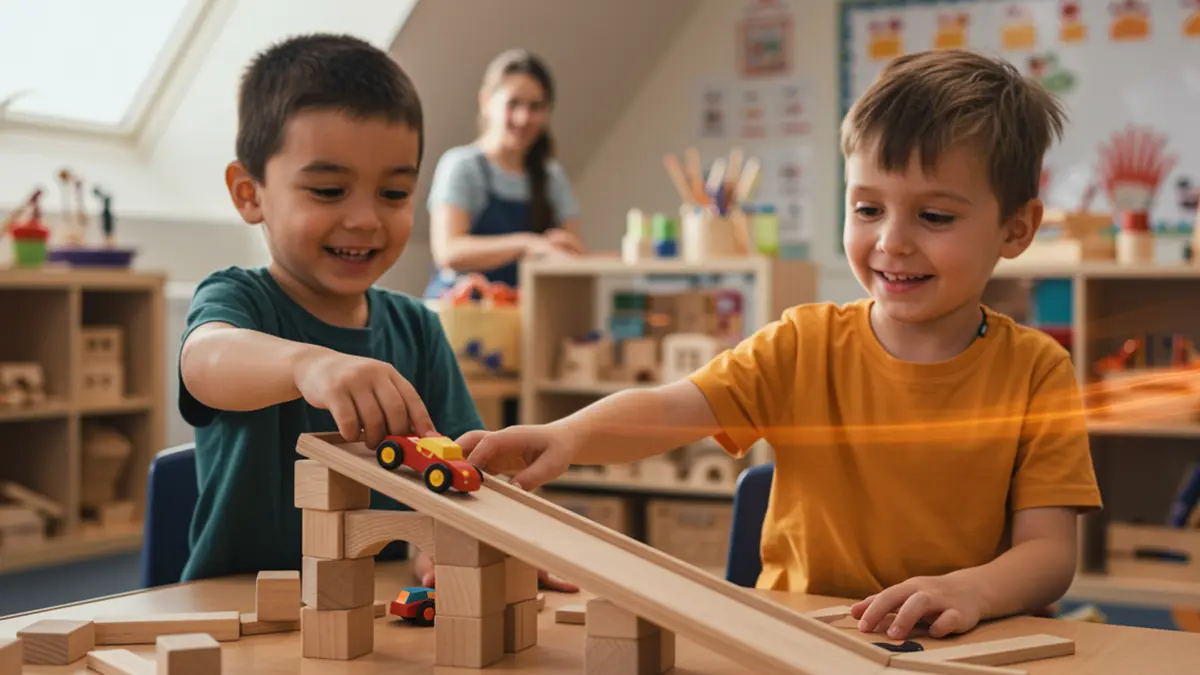
- Pouring, scooping, ramps, and rolling invite early problem‑solving.
- Simple choices and visuals help toddlers practice independence.
Preschool & Early Pre-K (Travelers, Explorers)
- Longer attention for building, patterning, and pretend play.
- Open‑ended centers: blocks, sensory trays, art, dramatic play, and nature tables.
- Teachers model language for observing, comparing, and planning.
Older Pre-K (Investigators)
- Multi‑step projects (design → build → test → improve).
- Early collaboration: taking turns with tools, sharing ideas, documenting results with drawings or photos.
Our STEAM Framework (Simple & Hands‑On)
See → Try → Talk → Tweak → Show
We organize learning around real questions children ask. Each classroom cycles through:
1) See — Notice something interesting (a shadow on the rug, a floating leaf).
2) Try — Test it with safe tools (flashlights, droppers, magnifiers).
3) Talk — Share observations with peers and teachers.
4) Tweak — Change one thing and try again.
5) Show — Capture learning with a quick drawing, label, or photo.
This loop builds flexible thinking and persistence — the heart of curiosity.
Safety by Design
Curiosity needs a safe runway. These routines keep our early learning center in Skyway safe while children explore and discover. Our environments feature:
- Age‑right materials and small‑parts checks (the tube test) for anything hands‑on.
- Within‑sight, within‑reach supervision for water and outdoor play.
- Clear routines for handwashing, tool use, and clean‑up so children know what to expect.
Safety Check: Water play stays at the table with a grown‑up within arm’s reach. Magnets and button batteries are never used as loose parts. For concerns or emergencies, call your pediatrician or 911.
Partnering with Families (Home ↔ Classroom)
We keep ideas doable for busy evenings. Weekly snapshots show what your child explored, the words we used to talk about it, and one tiny activity you can try at home. Have a question about milestones or behavior? We’ll meet you where you are with simple, steady routines and visuals you can use tomorrow.
- Daily Rhythm Planner (ZIP)– A one-page handoff that keeps home and classroom in sync.
- Milestone Snapshot 0–5 (PDF) – A quick, age-by-age check that turns “not yet” into a simple plan.
Try This Tonight: “Pour & Sort Sink Station” (10 Minutes)
You’ll need: 2–3 plastic containers, a muffin tin, a small cup, and a towel.
- Place containers in the sink or on a tray with a thin layer of water.
- Invite your child to pour between containers, then sort floating items (spoons, large lids) into the muffin tin.
- Add language: “Which holds more? What happens if we tilt it?”
- End with a quick clean‑up routine and a high‑five.
Why it works: Strengthens hand‑eye coordination, early measurement ideas (more/less), and focus through repetitive actions.
What Families Notice in the First Two Weeks
At our early learning center in Skyway, children settle into predictable rhythms: morning welcomes, open-ended centers, outdoor exploration, and small-group projects. You’ll see more descriptive language (“I poured it fast, so it splashed”), longer focus during building or art, and small bursts of independence—hanging a jacket, choosing materials, helping a friend.
Teachers model the See → Try → Talk → Tweak → Show loop aloud so children learn to test ideas safely and then share what happened. If your child needs support with transitions, we use visuals, first/then language, and co-regulation strategies you can mirror at home.
Curious what this looks like in each age group? Explore our Programs or Schedule a Tour to visit a classroom in person.
The Big Picture
At Little STEAMers—our early learning center in Skyway—curiosity becomes a habit when children are offered warm routines, choice-filled centers, and tools that fit small hands. We pair open-ended materials with teacher talk that invites noticing, comparing, and explaining—so ideas get clearer and confidence grows. That’s how play becomes progress, one well-supported “try again” at a time.
Educational overview only; not medical advice. For concerns or emergencies, call your pediatrician or 911.